Most people do not think much about their hot water system until it starts making unusual noises, begins leaking or stops working before a morning shower. If you are building, renovating or replacing an older unit, comparing hot water systems before something goes wrong can make a significant difference to your household comfort, energy use and long-term running costs.
For Adelaide homeowners, the main options are heat pumps, solar hot water, continuous flow gas and electric storage systems. Each has advantages and limitations. The best choice depends on your household size, usage habits, existing energy connections, available space and budget.
If you are already considering a replacement, Flowtec provides professional hot water system installation, repairs and servicing in Adelaide.
How to Choose the Right Hot Water System
There is no single hot water system that is automatically best for every Adelaide home. Before choosing one, consider:
– Household size: More occupants generally create greater hot water demand.
– Usage habits: Simultaneous showers and appliances affect the capacity required.
– Available energy sources: Your home may already have electricity, solar PV, natural gas or LPG.
– Installation space: Some systems need an outdoor tank, airflow, ventilation or suitable roof space.
– Upfront budget: Equipment and installation costs differ between technologies.
– Long-term running costs: A less expensive unit may consume more energy over its lifespan.
– Time in the property: Investing in efficiency can make more sense if you plan to stay long term.
A professional assessment can help balance installation cost, capacity and ongoing efficiency instead of selecting a system based only on its purchase price.
Hot Water System Comparison
| System | Upfront cost | Running cost | Space required | Often suitable for |
|---|---|---|---|---|
| Heat pump | Higher | Lower | Outdoor tank and airflow | Medium to large households and homes with solar PV |
| Solar hot water | Higher | Lower | Suitable roof and storage space | Larger households with good roof exposure |
| Continuous flow gas | Medium | Medium | Compact unit and suitable gas supply | Small to medium households wanting hot water on demand |
| Electric storage | Lower | Higher | Space for a storage tank | Smaller households and straightforward replacements |
These are general comparisons. Actual costs and performance depend on the model, installation conditions, tariffs and how your household uses hot water.
Heat Pump Hot Water Systems
A heat pump works similarly to a refrigerator in reverse. Instead of producing all its heat through direct electrical resistance, it extracts thermal energy from the surrounding air and transfers it into water stored in a tank.
When a Heat Pump May Be Suitable
– Medium to large households.
– Homes aiming to reduce electricity consumption.
– Properties with rooftop solar PV.
– Homeowners focused on long-term energy savings.
– Homes with adequate outdoor space and airflow.
Heat pumps generally cost more to install than conventional electric storage systems. They also need sufficient airflow around the unit, making the installation location important. Adelaide’s generally temperate climate may suit heat pump operation, but the unit still needs to be correctly sized for the household.
Solar Hot Water Systems
Solar hot water systems use roof-mounted collectors to capture energy from sunlight and transfer it to the water. When solar energy is insufficient, an electric or gas booster supplies additional heating.
When Solar Hot Water May Be Suitable
– Homes with good roof orientation and sun exposure.
– Larger households with consistent hot water demand.
– Homeowners planning to remain in the property long term.
– Households seeking to reduce conventional energy consumption.
Roof orientation, available space and shading influence performance. The booster is also important because it keeps hot water available during cloudy weather or periods of higher demand.
Continuous Flow Gas Hot Water Systems
Continuous flow systems heat water when a tap is opened. Because they do not store a full tank of hot water, they avoid maintaining the temperature of stored water throughout the day.
When Continuous Flow Gas May Be Suitable
– Small to medium households.
– Homes with an existing natural gas connection.
– Properties with limited space for a storage tank.
– Households wanting hot water on demand.
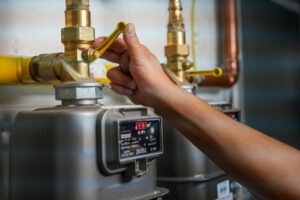
The property needs an appropriate gas supply. Installing a new gas line or upgrading the existing connection can increase the total project cost. The unit must also be correctly sized, as an undersized system may struggle when several outlets are used simultaneously.
Flowtec provides licensed gas fitting services across Adelaide and the Adelaide Hills when gas connection work is required.
Electric Storage Hot Water Systems
Electric storage systems heat water inside an insulated tank and keep it available for later use. They are straightforward to install and remain common in smaller households and replacement projects.
When Electric Storage May Be Suitable
– Households with one to three people.
– Properties where the initial installation budget is a priority.
– Homes without a gas connection.
– Straightforward replacements for an existing storage system.
Electric storage systems generally use more electricity than heat pumps. However, operating costs may be reduced when the system uses an appropriate off-peak tariff or works effectively with rooftop solar PV.
Which Hot Water System Is Best for Different Household Sizes?
One or Two People
Electric storage or a correctly sized continuous flow system may provide sufficient capacity without installing a larger and more expensive unit. A small heat pump may also be worth considering when energy efficiency is a priority.
Three or Four People
Heat pumps, continuous flow gas and correctly sized electric storage systems may all be suitable. Usage patterns are especially important. A household where everyone showers in the morning has different peak demand from one where hot water use is spread throughout the day.
Five or More People
Larger households generally require greater capacity. Heat pumps, solar hot water and appropriately sized continuous flow systems are worth comparing. An undersized system can lead to inconsistent hot water and unnecessary strain on the equipment.
What to Consider Before Installing a New Hot Water System
Correct System Size
A system that is too small may leave the household without enough hot water. A unit that is unnecessarily large may increase purchase and running costs. Correct sizing should consider:
– Number of occupants.
– Number of bathrooms.
– Shower duration and frequency.
– Simultaneous hot water use.
– Peak demand times.
– System technology.
– Property layout.
Existing Plumbing and Energy Connections
Changing from electric to gas, storage to continuous flow or another significantly different technology may require alterations to plumbing, electrical or gas infrastructure. The property should be assessed before a final system is selected.
Flowtec provides a complete range of plumbing and gas services across Adelaide when additional work is needed as part of an upgrade.
Installation Space and Access
Storage tanks, heat pumps and continuous flow units have different clearance, ventilation and access requirements. The location must allow the system to operate correctly and remain accessible for future servicing.
Upfront and Long-Term Costs
Do not compare systems based only on purchase price. Consider the installation cost, expected energy consumption, household demand, maintenance requirements, expected lifespan and how long you plan to remain in the property.
Frequently Asked Questions About Hot Water Systems
What is the most energy-efficient hot water system?
Heat pump and solar hot water systems are generally among the most energy-efficient options because they rely less on direct electrical resistance heating than conventional electric storage systems. Performance still depends on household usage and installation conditions.
Is a heat pump worth considering in Adelaide?
A heat pump can be attractive for households seeking to reduce electricity consumption, particularly when the property already has rooftop solar. Its suitability depends on available outdoor space, airflow, household demand and budget.
Is continuous flow gas a good option?
It may be suitable when the property already has an appropriate gas supply and the household wants water heated on demand. The unit must be sized for the number of outlets likely to be used simultaneously.
Is electric storage still a practical choice?
Yes. Electric storage can suit smaller households, straightforward replacements and properties where keeping the initial cost down is important. Correct tank sizing and available off-peak or solar options should be considered.
Does solar hot water work on cloudy days?
Yes. Solar hot water systems typically use an electric or gas booster to maintain supply when sunlight cannot meet demand.
Should I repair or replace my existing system?
The answer depends on the system’s age, type of fault, repair history, efficiency and ability to meet current household demand. Replacement may offer better long-term value when repairs are becoming frequent or the unit no longer provides reliable hot water.
Get Professional Hot Water Advice in Adelaide
Choosing the wrong hot water system can result in higher energy bills, insufficient capacity or paying for equipment that does not suit how your household uses hot water. The objective is not to install the largest or most expensive unit. It is to select the system that best fits your property, household and budget.
Flowtec Plumbing & Gas provides hot water installation, replacement, repairs and servicing throughout Adelaide and the Adelaide Hills. Contact Flowtec Plumbing & Gas for straightforward advice and a professional assessment of your hot water needs.